What we walked into.
The GIB Foundation assessed alignment between Voluntary Sustainability Standards and emerging regulations through a highly manual process — weeks of expert work parsing hundreds of pages of standards and legislative text. Mapping indicators like biodiversity net gains, ESIA presence, and hazardous substance management created a serious bottleneck, slowed insights, and invited inconsistency.
The solution.
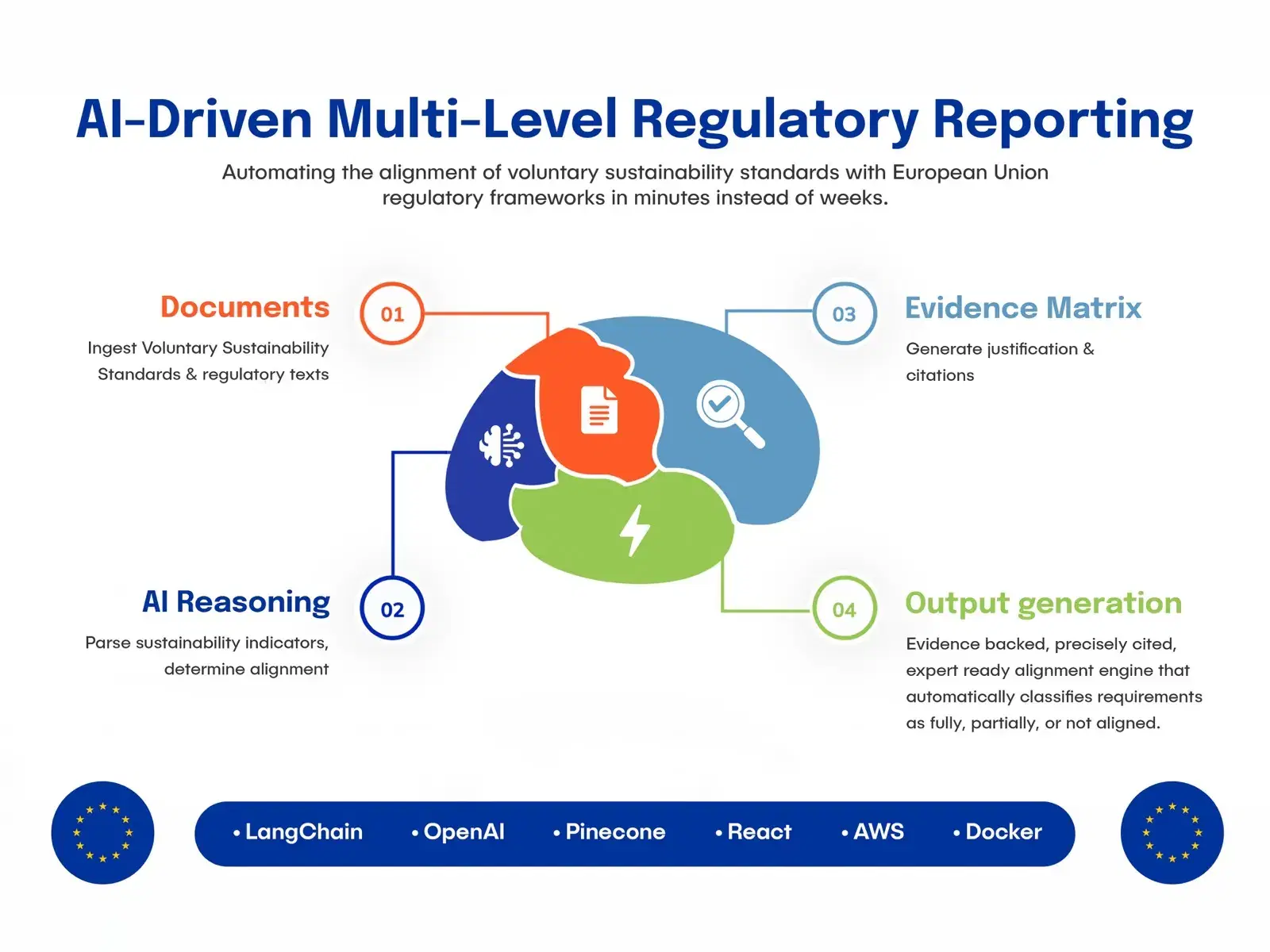
An automated regulatory mapping and parsing engine tailored to GIB's assessment framework.
AI-driven ingestion of full VSS documents (such as the Better Cotton Principles & Criteria) alongside regulatory texts.
Automatic classification of each indicator as Fully, Partially, or Not Aligned — with generated justifications and evidence citations.
What changed.
Assessment timelines reduced from several weeks of manual work to minutes of automated processing.
Granular, evidence-backed mapping for indicators like biodiversity net gains and ESIA requirements.
Assessments update rapidly as new standard versions (Better Cotton v3.1) or legislative iterations (CSDDD Omnibus) are released.
Automated tracking of CMR and HHP pesticide lists, with phase-out timelines mapped against global environmental standards.